
Join the Peace Church Movement
Say no to violence and war in the name of the Prince of Peace.
We recognize that war and militarism are inconsistent with the Gospel of Christ that calls us to love our enemies and pray for those that persecute us.

“Darkness cannot drive out darkness, only light can do that, hate cannot drive out hate, only love can do that.”
Why be a Peace Church?
It deepens our spirituality
Recognizes that war and militarism are inconsistent with the Christ’s call for us to love our enemies and pray for those that persecute us
Helps liberate us from war making, thus protecting our consciences and our souls
Fulfills the ministry of reconciliation (II Cor 5:18)
Continues the work of Reformation
Works to break the conflation of faith and empire that has been part of Christianity since the time of Constantine
Helps to influence the whole Presbyterian Church (USA) denomination
It puts our faith into action
Aligns us with those who have less power in the world
Places the church squarely on the side of collaboration and peaceful solutions to conflict
Equips people to discern their opposition to war and supports conscientious objection a faithful response to war
Recognizes that the business of war drains the resources our country needs to feed, clothe, educate, and house our own citizens
Names harm that war has done to soldiers and their families, to civilians, to the poor, to women and children, to society and to the environment
History of Presbyterian Peace Churches
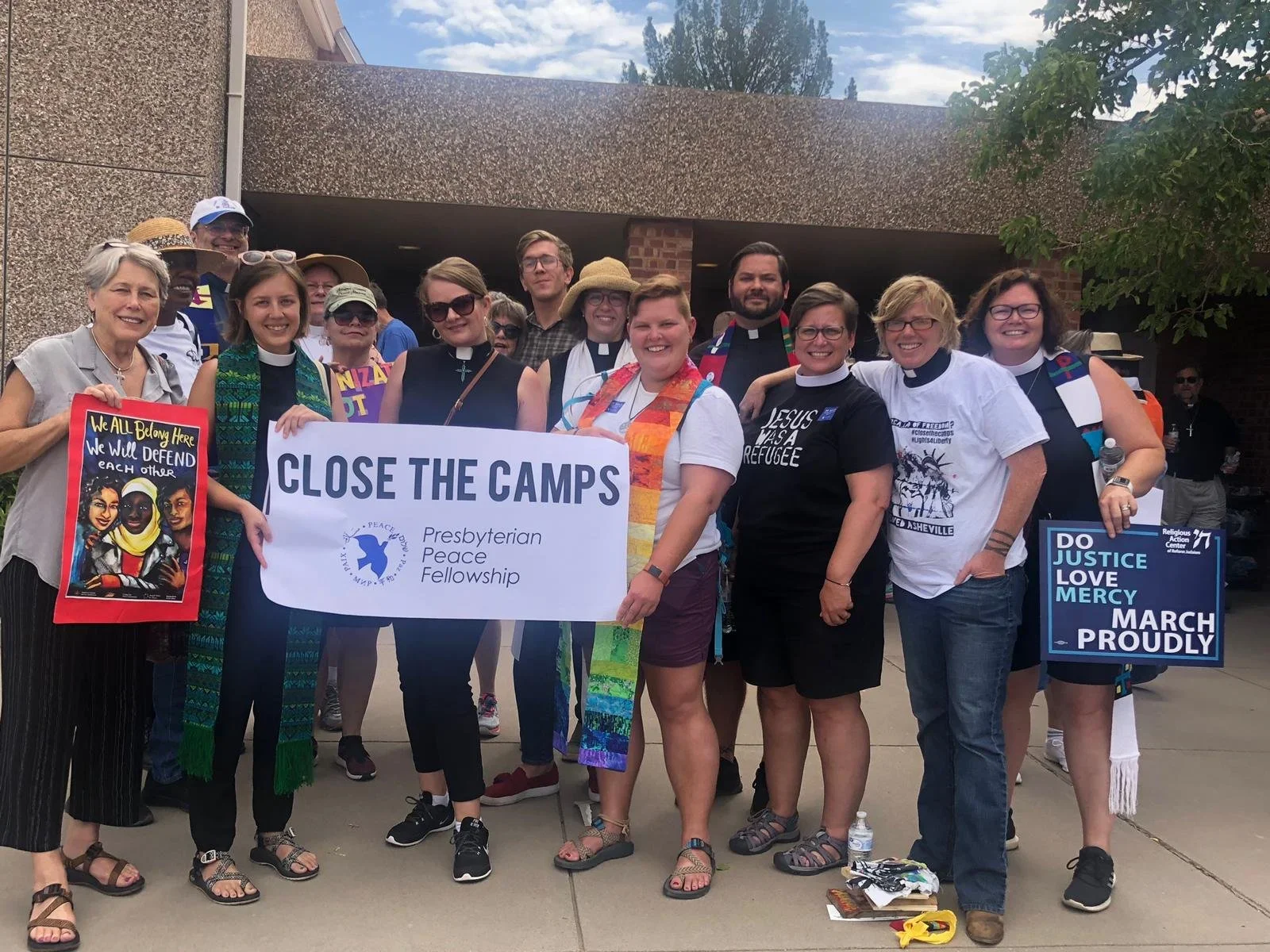
Traditionally, the term Peace Church refers to churches like the Society of Friends (Quakers), Church of the Brethren and the Mennonites. These churches have committed themselves to Christian pacifism or nonresistance.
-
In 1936 and 1938, the PC(USA) General Assembly affirmed a proposal to remove just war language from the Westminster Confession, then the only confessional standard for the church.
Each time, a majority of presbyteries voted for the proposals, but did not reach the super majority required change the church’s constitution.
-
In 1980, the General Assembly established the Peacemaking Program and approved Peacemaking — The Believer’s Calling, a document positioning foreign policy, colonial and imperial power, and nuclear weapons at the forefront of Presbyterian desire to live faithfully and biblically.
-
In 2010, on the 30th anniversary of Peacemaking: The Believers’ Calling, and after almost a decade at war, the 219th GA authorized a six-year discernment process to examine the church’s understanding of Jesus’s call to nonviolent discipleship.
The 220th General Assembly (2012) authorized study materials and a process of face-to-face discussions in both congregations and councils.
-
As a result of the discernment process, some churches began to question whether theology of Just War, which the church universal has adhered to for more than a millennium, is consistent with the scripture and our ministry of reconciliation. A few of these churches declared themselves Peace Churches.
In 2018, the 223rd General Assembly in St. Louis voted to recognize those churches that declare themselves Peace Churches within the Presbyterian Church (USA).
Resources
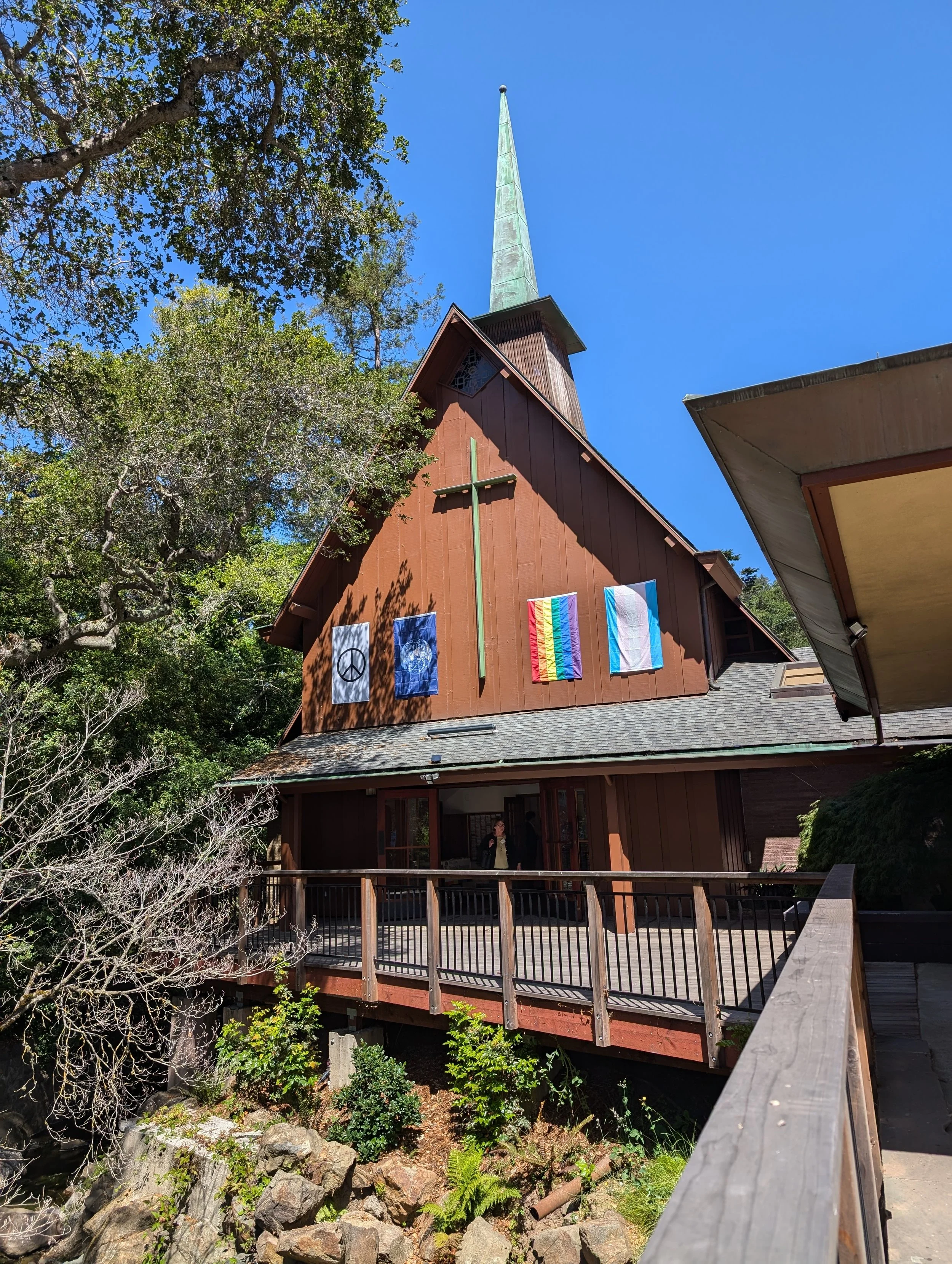
PPF is proud to connect and support congregations who declare themselves Peace Churches.
Want to join the movement?
Montclair Presbyterian Church in Oakland, CA
Read Declarations from Peace Churches
Statements from individual congregations affirming their commitment Peacemaking Witness as defined by the of the Presbyterian Church (USA).
First Presbyterian Church of Palo Alto in Palo Alto, CA
Montclair Presbyterian Church in Oakland, CA
Church of Reconciliation Presbyterian Church in Chapel Hill, NC
Faith Presbyterian Church in Austin, TX
Rutgers Presbyterian Church in NYC.
Contact us if you want more information or support for your congregation becoming a Peace Church.

First Presbyterian Church of Palo Alto, CA
Explore the life of a Peace Church
Peace Church Sermons
Recognizing that war and militarism are inconsistent with the Christ’s call
Reclaiming Christ for Christmas – Rev. Stephany Graham – Peekskill Presbyterian Church
Our Shared Humanity – Rev. Ben Daniel, Montclair Presbyterian Church
Why We Are a Peace Church – Rev. Geoff Browning, First Presbyterian Church, Palo Alto
The Prophetic Call to Resist Militarism and Cultivate Peace – Rev. Mark Davidson
A Consideration of What Is True -Rev. Ben Daniel, Montclair Presbyterian Church
Conscientious Objector Statements
Young people who are members of Peace Churches may write statements affirming their commitment to nonviolence and registering as Conscientious Objectors.
FAQ
-
Peace Churches affirm that the best way to avoid invasion is for a country to live in peace with its neighbors and to engage proactively in trade, diplomacy and cultural exchange.
Peace Churches recognize there is evil in the world and that new proactive structures and responses need to be researched, funded, developed and implemented. Peace Churches advocate for new approaches and new consensus around the world community coming together for the common good. Peace Churches recognize the problems arising from greed, pride and the fiction of self-reliance. Peace Churches recognize the enormous effort required to overcome the legacy of human self-inflicted carnage but also recognize that once we open the door to military action, we are also opening the door to uncontrolled death and destruction that is the result of that action.
-
Peace Churches acknowledge that military action has never prevented a genocide and that while military action has—on one or two occasions—helped to draw down genocides that already were ongoing, militaries historically have been far more likely to be used in the service of genocide than they are to be used in the prevention or alleviation of genocide. This is particularly true in the United States, military which perpatrated genocide against native people in North America, used nuclear weapons against Japanese civilians, directly and deliberately attacked non-combatants during the Viet Nam war, and employed torture in its wars against terror. Members of Peace Churches are witnesses, accompaniers and nonviolent disrupters of genocide. It is not an easy path, it is not neutral, it is a personal commitment to protect the vulnerable through non violent means.
-
Peace Churches are part of a Reformed Christian tradition and individual congregations who believe warfare to be contradictory to the Gospel of the Prince of Peace. In the Presbyterian context, a particular church may declare itself to be a peace church after a season of discernment by a vote of session or vote of the congregation. Such a vote and affirmation should in no way limit the freedom of individuals to disagree with the congregation’s decisions or to speak their minds on matters of war and peace because we believe that “God alone is Lord of the conscience.” (Westminster Confession 6.109)
-
Peace churches are deeply concerned about the militarization of American law enforcement, and join in calls to defund the police. Peace Churches advocate for funding for the common good – health care, housing, education, clean water, clean streets, good jobs. Peace Church is an advocate for reconciliation, restorative justice and redemption. Peace Churches recognize that militarization and aggressive policing have not served God’s commandment to love our neighbor. We must reallocate funding if we are to achieve a just and self-supporting community of all God’s children.
-
We affirm our belief in the power of nonviolence in any situation. We do not ignore oppression, but are called to provide solidarity and support for nonviolent resisters, and we accept our particular obligation to uncover and reject our own government’s complicity with injustice anywhere in the world. Because we believe that “God alone is Lord of the conscience” (Westminster Confession 6.109), we have a responsibility to respond to oppression by seeking our own effective nonviolent response.
-
Is a commitment to nonviolence a luxury allowed only because of our privileged status in society and the world?
To suggest that a congregation’s commitment to pacifism should be moderated by the acknowledgement of privilege is to embrace a simplistic version of the just war theory, which most Peace Churches reject as outmoded and unhelpful. However, this disavowal of just war theory does not diminish the responsibility of all Christians to be aware of the ways issues of privilege impact the work and witness of all churches, including Peace Churches; Peace Churches, therefore, remain committed to bearing witness to the realm of the Prince of Peace in ways that move us beyond the comforts of privilege and that are informed by the voices and perspectives of those who, historically, have been silenced and marginalized.
Another way of viewing this question is to ask, are we, Protestant Christians in America, failing to see our own bias and privilege when we claim just war as noble and moral?
As citizens of this country we sit at the apex of world power and domination. No nation in the history of the world has manufactured, sold, and used more weaponry against the rest of the world than our own country. No other nation has dropped more bombs on the people of other countries. No other nation has used nuclear weapons on civilians. If we claim that we must maintain our military for the purpose of protecting civilians while simultaneously ignoring the death and devastation war causes to civilians, then our logic is bereft of a moral compass. If we are willing to accept civilian casualties for the “greater good,” then how many are we willing to accept? 20%, 40%, 60%? What is the acceptable level of innocent women, children and men losing their lives by our hand?
We should also remember that Christianity has a long and dark history of violence used against others from the Crusades to take back the Holy Land from Muslims, the Doctrine of Discovery that provided a patina of legitimacy to the stealing of land from indigenous peoples throughout the world, to genocide against native peoples under the guise of Christianizing them. Christianity has not only helped to enslave and impoverish others, we have not recognized their suffering and loss of life as equal to our own. Our ongoing struggle with white supremacy and militarized policing are the ripple effects of these original sins. We must repent of this, not with yet more militarism in the guise of protecting civilians, but seeking to say no to war and violence in the name of Christ who was himself a victim of war and violence.
Prepared by representatives of Peace Churches belonging to the PPF Peace Church Working Group.